Report Summary

Report Summary

The U.S. health economy is a textbook case of a tragedy of the commons: it is governed by incentives that reward individual actors for behavior the collective cannot sustain.

Providers are paid to intervene, not prevent. Patients reach for a pill, not a lifestyle change. Payers reduce their own costs by shifting the burden onto patients and providers. Life science companies price to what rebate structures and patent exclusivity will bear, not to the value delivered. As it stands, no one is incentivized to improve health. As a result, costs continue to rise, access worsens, health outcomes stagnate and resources are allocated inefficiently.

This installment of the Trends Shaping the Health Economy Report highlights six trends that reveal the nature of the tragedy:
  1. an accidental history that produced a system no one designed and increasingly few can afford;

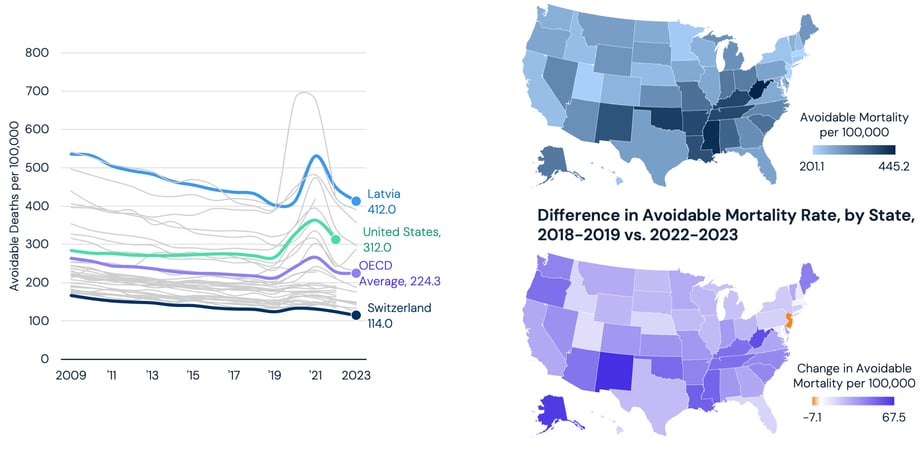
  2. a population whose health is declining faster than a sick care system built to intervene, not prevent, can respond;

  3. a marketplace that has never defined, and therefore does not measure, whether what it delivers is comparatively – or at all – valuable;

  4. an incentive structure so misaligned that fraud, waste and abuse have become structural rather than exceptional;

  5. a supply of care built around what is profitable rather than what is needed, leaving primary and preventive care chronically scarce; and

  6. and a reckoning now arriving from outside the system, as cost controls collide with a health economy that is no longer organically growing.

Because of the scope of the health economy’s tragedy of the commons, reform is inevitable. The question is whether change is pursued proactively from within the system or imposed externally through government intervention. Who will assign ownership, cost and accountability to the parties that have so far escaped them, and which stakeholders will be impacted the most?

01 · What System?

Americans Disagree on What They Want From a Healthcare System

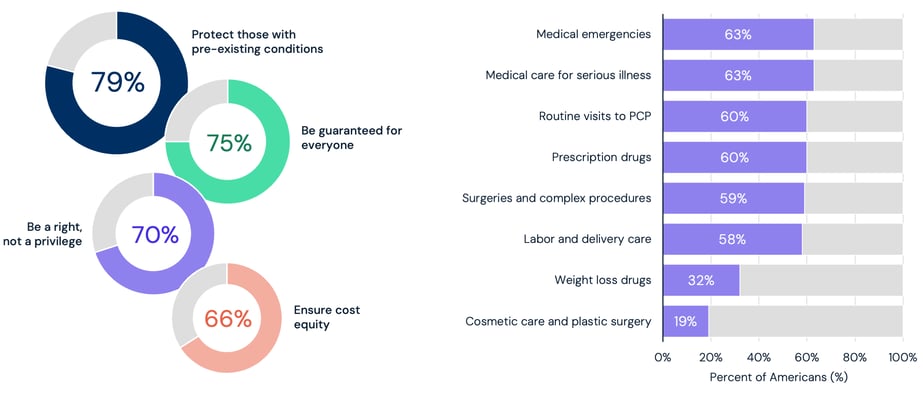
Some general principles about healthcare are widely held: 79% of people believe healthcare should protect people with pre-existing conditions. However, there is a lack of consensus on the specific services that a hypothetical Federal healthcare system should cover.

Continue Reading (p. 14)

Americans’ Beliefs About What They Want in Healthcare, 2025

Americans’ Support For the Federal Government Covering Medical Services, 2026

Americans’ Beliefs About What They Want in Healthcare, 2025 and Americans’ Support For the Federal Government Covering Medical Services, 2026

Note: PCP denotes primary care physician. The full items are “There should be guaranteed access to health care for everyone, regardless of ability to pay” and “Health care should ensure equity in billed costs across insurance types.” Medical care for serious illness includes care for conditions like cancer and heart disease.

Source: Searchlight Institute; John Hopkins Institute For Policy Solutions.

About Trilliant Health

Trilliant Health's analytics platform provides a comprehensive view of healthcare supply, demand and yield across local markets. Recognizing that every American is affected by the health economy, its mission is to redefine evidence-based strategy while optimizing return on invested capital.